
Why we do not prescribe antibiotics on demand
Antibiotics are used to treat or prevent some types of bacterial infection. They work by killing bacteria or preventing them from spreading. But they do not work for everything.
Many mild bacterial infections get better on their own without using antibiotics.
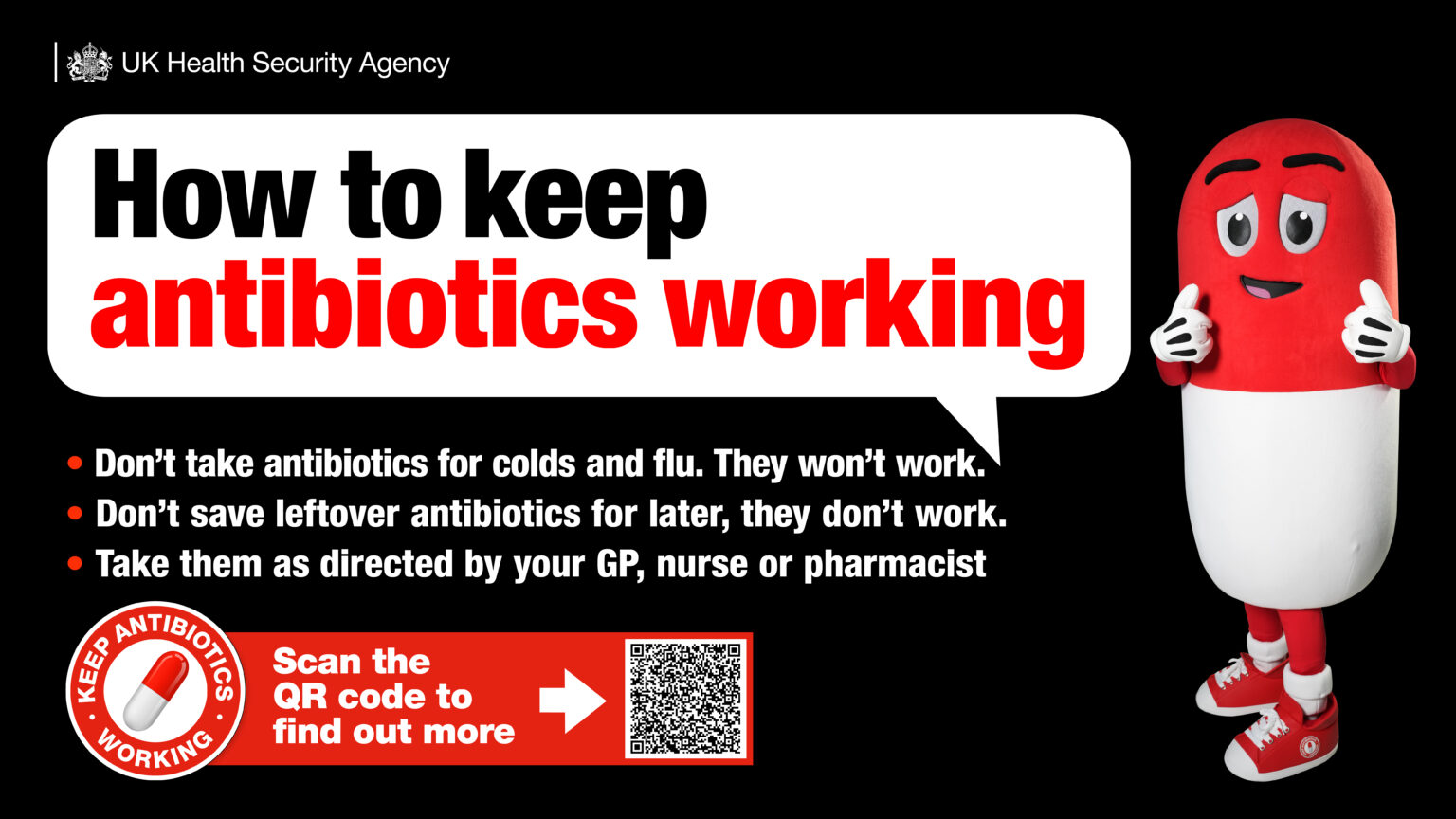
Antibiotics do not work for viral infections such as colds and flu, and most coughs.
Antibiotics are no longer routinely used to treat:
- chest infections
- ear infections in children
- sore throats
When it comes to antibiotics, take your doctor’s advice on whether you need them or not. Antibiotic resistance is a big problem – taking antibiotics when you do not need them can mean they will not work for you in the future.
Side effects and risks
Antibiotics can cause:
nausea, diarrhoea, or allergic reactions, Yeast infections (especially in women) disruption of your gut bacteria, which play a role in your immune system and digestion.
In some cases, antibiotics can trigger serious complications, like: C. difficile infection — a dangerous colon infection caused by disrupted gut flora.
More information
Read more on the NHS website or on GOV.uk website.


